Bath Salts for Muscle Pain: Do They Actually Work?
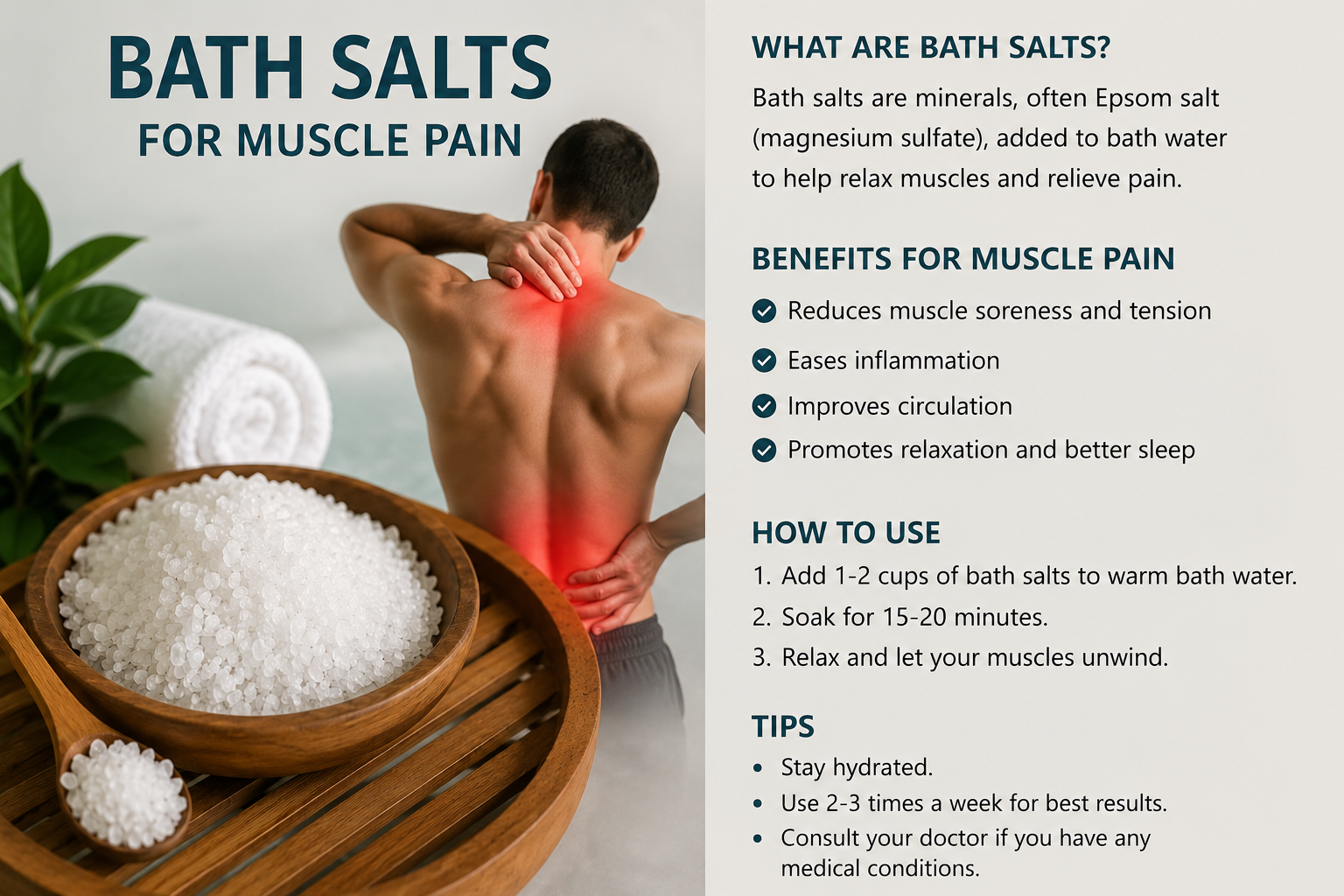
If you’ve ever stepped out of a warm bath feeling noticeably less stiff, you’re not imagining things. Bath salts for muscle pain have been used for centuries — and modern science is beginning to explain why they may actually help. Whether you’re nursing post-workout soreness, managing chronic tension, or simply looking for a natural way to unwind tight muscles, this guide breaks down everything you need to know.
Are Bath Salts Good for Muscle Pain? What the Science Says
Let’s start with the big question. When people ask “are bath salts good for muscle pain?” they’re usually picturing a relaxing soak after a long run or a gruelling day. And while the anecdotal evidence is enormous, the scientific picture is genuinely interesting — and a little more nuanced than most wellness sites let on.
The most well-researched bath salt ingredient is magnesium sulphate, commonly known as Epsom salt. Magnesium is involved in over 300 enzymatic reactions in the body, including those that regulate muscle contraction and nerve function. When magnesium levels are low — which is surprisingly common in the UK population — muscle cramps, spasms, and general tension tend to increase.
A widely referenced study conducted at the University of Birmingham found that participants who bathed in Epsom salt solutions showed measurable increases in blood and urine magnesium levels, suggesting that the skin can absorb magnesium transdermally. While this research has faced some scrutiny regarding methodology, it remains a foundational piece in the conversation around magnesium supplementation and muscle health.
“Magnesium deficiency is one of the most common — and most overlooked — contributors to chronic muscle tension and post-exercise soreness.”
Beyond magnesium absorption, the warm water itself plays a significant physiological role. Heat causes vasodilation — widening of the blood vessels — which improves circulation to muscle tissue, helps flush out metabolic waste products like lactic acid, and reduces the tension held in muscle fibres. In other words, even if you stripped the minerals out entirely, a warm bath would still offer meaningful relief. The salts appear to work synergistically with that process.
Bath Salts for Muscle Pain: The Best Types and What Makes Them Different
Walk into any UK health shop or scroll through a wellness retailer and you’ll find no shortage of options. But not all bath salts are created equal — particularly when your goal is genuine muscle relief rather than simply a pleasant soak. Here’s how the main types compare:
| Salt Type | Key Minerals | Best For | Evidence Level |
|---|---|---|---|
| Epsom Salt (Magnesium Sulphate) | Magnesium, Sulphate | Muscle soreness, post-exercise recovery, cramps | Moderate — most studied |
| Dead Sea Salt | Magnesium, Potassium, Calcium, Bromide | Joint inflammation, skin conditions, muscle tension | Good — particularly for arthritis |
| Himalayan Pink Salt | Sodium, Trace minerals (iron, zinc, potassium) | General relaxation, detoxification, mild muscle ease | Limited — largely anecdotal |
| Sea Salt (Unrefined) | Sodium, Magnesium, Potassium, Iodine | General muscle recovery, skin health | Limited — minimal specific research |
Epsom Salt: The Gold Standard for Muscle Soreness
If you’re specifically targeting muscle soreness after exercise or dealing with tight, overworked muscles, Epsom salt is your first port of call. It’s inexpensive, widely available across the UK, and has the most accumulated evidence behind it. Look for pharmaceutical-grade Epsom salt rather than cosmetic-grade if you want to ensure purity and consistent magnesium content.
Dead Sea Salt: The Choice for Joint Pain
For those dealing with muscle and joint pain — particularly if there’s an inflammatory component such as arthritis or fibromyalgia — Dead Sea salt has compelling evidence on its side. A study published in the International Journal of Dermatology found that bathing in Dead Sea salt solutions reduced markers of joint inflammation and improved mobility in participants with rheumatoid arthritis. The rich bromide content also has naturally calming properties on the nervous system, making it useful for stress-related muscle tension.
Curious about other natural anti-inflammatory approaches? Our guide to natural pain relief strategies covers a range of science-backed options that complement your bath routine.
Best Bath Salts for Muscle Pain: What to Look For When Buying
The UK market for bath salts has expanded considerably in recent years, which is both a good and a slightly overwhelming thing. Here’s what genuinely matters when choosing a product:
🔍 What to Look for on the Label
- High magnesium content — at least 99% magnesium sulphate for Epsom salt products
- No artificial dyes or synthetic fragrance — these can irritate skin and dilute the therapeutic effect
- Essential oil additions — eucalyptus, peppermint, and arnica are all backed by evidence for muscle relief
- Grain size — medium grain dissolves well in bath water; ultra-fine can clump; coarse is better as a scrub
- Certifications — look for cruelty-free, dermatologically tested, or pharmaceutical-grade indicators
- Transparent ingredient sourcing — particularly relevant for Dead Sea and Himalayan products
Essential oils can meaningfully enhance the therapeutic effect of your bath. The NHS acknowledges aromatherapy as a complementary approach to pain management, and peppermint oil in particular contains menthol, which activates cold-sensitive receptors in the skin and has a well-documented analgesic effect. Eucalyptus has anti-inflammatory properties, and lavender addresses the psychological tension that so often accompanies physical muscle pain.
How to Use Bath Salts for Muscle Pain: Getting the Most from Your Soak
There’s a right way and a less effective way to use bath salts for muscle relief. The details matter more than most people realise — temperature, duration, concentration, and timing all influence how much benefit you’ll actually experience.
The Optimal Bath Routine for Muscle Recovery
Temperature: Warm, not hot. This is perhaps the most important point. Water that is too hot can actually increase inflammation and place unnecessary strain on the cardiovascular system. Aim for 37–39°C (98–102°F) — warm enough to promote vasodilation and relaxation without overheating.
Concentration: For a standard bath (approximately 150 litres of water), add 300–500g of Epsom salt. This is roughly two full cups. Using less significantly reduces the mineral concentration in the water; using more doesn’t necessarily increase the benefit and becomes expensive.
Duration: Research and clinical guidance consistently points to 15–20 minutes as the optimal soak time. This is long enough for meaningful transdermal magnesium absorption and for the heat to penetrate muscle tissue, but short enough to avoid dehydrating the skin or disrupting the body’s temperature regulation.
Timing: For post-exercise recovery, a bath within 1–2 hours of your workout is ideal. For general muscle tension or back pain, evening is often best — the warm soak naturally raises then lowers core body temperature, which signals the body that it’s time to sleep and promotes deeper muscular rest overnight.
“The recovery bath isn’t just for elite athletes — it’s one of the most accessible, evidence-supported tools for anyone dealing with the physical demands of daily life.”
After your soak, drink a glass of water to rehydrate, and consider a light stretch while your muscles are still warm and pliable. This combination — salt bath followed by gentle mobility work — is what many physiotherapists recommend as an accessible, low-cost recovery protocol. You can explore more recovery strategies in our full muscle recovery guide.
Bath Salts for Muscle and Joint Pain: A Closer Look at Specific Conditions
Different types of muscle and joint pain respond to bath salts in different ways. Understanding this helps you tailor your approach rather than using a one-size-fits-all method.
Post-Exercise Muscle Soreness (DOMS)
Delayed onset muscle soreness — that familiar ache that peaks 24–48 hours after an intense session — is primarily caused by microscopic tears in muscle fibres and the subsequent inflammatory response. Epsom salt baths address this through two mechanisms: the magnesium sulphate may help reduce systemic inflammation, and the warm water promotes blood flow to carry nutrients to the repairing tissue. For athletes and regular gym-goers, this makes bath salts a genuinely useful tool in the recovery toolkit.
Chronic Back Pain
For back pain specifically, a bath salt muscle soak works best on the muscular component of back pain — tightness, spasm, and tension in the lumbar or thoracic region. It is less effective for structural issues such as disc herniation or sciatica, where the source of pain is neurological or skeletal rather than muscular. That said, even in these cases, easing surrounding muscle tension can provide meaningful secondary relief. The Arthritis Foundation’s guidance on hydrotherapy supports warm water immersion as a complementary approach to chronic musculoskeletal pain.
Arthritis and Joint Stiffness
Dead Sea salt baths have the strongest clinical backing for joint conditions. The combination of mineral-rich water and heat can temporarily reduce joint stiffness, improve range of motion, and decrease pain scores in people living with osteoarthritis and rheumatoid arthritis. Many rheumatologists and physiotherapists in the UK include hydrotherapy as part of a comprehensive management plan for these conditions.
For a broader look at natural approaches to joint health, our joint health natural remedies article covers everything from anti-inflammatory diets to targeted supplementation.
What Bath Salts Cannot Do — Keeping Expectations Realistic
Honest wellness writing has to include this section. Bath salts are a genuinely useful complementary tool, but they are not a substitute for medical treatment, and they won’t resolve underlying structural or systemic conditions.
If your muscle pain is severe, persistent (lasting more than a few weeks), accompanied by swelling or redness, or if you have a cardiovascular condition, kidney disease, or open wounds, consult your GP before beginning regular Epsom salt baths. High magnesium intake — even through the skin — may not be appropriate for everyone.
Think of bath salts as one lane in a wider road to recovery. They work beautifully alongside stretching, physiotherapy, appropriate rest, hydration, and a diet rich in anti-inflammatory foods. They don’t replace any of those things — they enhance them.
Frequently Asked Questions
Are bath salts good for muscle pain?
What are the best bath salts for muscle pain?
How long should you soak in bath salts for muscle pain?
Can bath salts help with joint pain as well as muscle pain?
Can I use bath salts for back pain?
How much Epsom salt should I add to my bath?
The Bottom Line on Bath Salts for Muscle Pain
There’s a reason this remedy has endured for centuries and continues to be recommended by physiotherapists, sports scientists, and wellness practitioners alike. Bath salts — particularly magnesium-rich Epsom salt — offer a genuine, science-supported route to muscle relief that is safe, affordable, and accessible to almost everyone.
The key is understanding what they do well (easing tension, supporting recovery, reducing mild inflammation, improving sleep) and what they don’t do (treat structural conditions, replace professional care, work without warm water). Used intelligently and consistently, a bath salt soak is one of the most effective evidence-backed self-care tools available without a prescription.
So if your muscles have been telling you they need attention — perhaps it’s time to listen, draw a warm bath, and give them exactly what they’re asking for.
Want More Science-Backed Wellness Insights?
Join thousands of UK readers who get practical, evidence-based health and wellness guidance delivered directly to their inbox — no fads, no fluff.
Explore More Wellness Guides →